Visual Computing Library  devel
Loading...
Searching...
No Matches
vcl::Lines Class Reference

The Lines class provides an abstraction for rendering 3D lines with variable thickness and different implementation strategies. More...

#include <vclib/bgfx/primitives/lines.h>

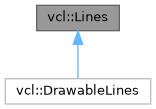
Inheritance diagram for vcl::Lines:

Public Types

enum class  ColorToUse { PER_VERTEX , PER_EDGE , GENERAL }
 
enum class  ImplementationType { PRIMITIVE = 0 , CPU_GENERATED = 1 , COUNT }
 

Public Member Functions

ColorToUse colorToUse () const
 Returns the color that is used to render the lines.
 
void draw (uint viewId) const
 Draws in the given view the lines with the current settings.
 
ColorgeneralColor ()
 Returns a reference to the general color that is used to render the lines when colorToUse() is set to ColorToUse::GENERAL. This allows to modify the color directly.
 
Color generalColor () const
 Returns the general color that is used to render the lines when colorToUse() is set to ColorToUse::GENERAL.
 
ImplementationType implementationType () const
 Returns the current implementation type that is used to render the lines.
 
 Lines (const std::vector< float > &vertCoords, const std::vector< float > &vertNormals, const std::vector< uint > &vertColors, const std::vector< uint > &lineColors, float thickness=5.0f, bool shadingPerVertex=false, ColorToUse colorToUse=ColorToUse::GENERAL, ImplementationType type=ImplementationType::COUNT)
 Creates a Lines object with given points and parameters.
 
 Lines (const std::vector< float > &vertCoords, const std::vector< uint > &lineIndices, const std::vector< float > &vertNormals, const std::vector< uint > &vertColors, const std::vector< uint > &lineColors, float thickness=5.0f, bool shadingPerVertex=false, ColorToUse colorToUse=ColorToUse::GENERAL, ImplementationType type=ImplementationType::COUNT)
 Creates a Lines object with given points and parameters.
 
 Lines (ImplementationType type=ImplementationType::COUNT)
 Creates a Lines object with default parameters and without points.
 
void setColorToUse (ColorToUse color)
 Sets which color to use for rendering the lines.
 
void setPoints (const std::vector< float > &vertCoords, const std::vector< float > &vertNormals, const std::vector< uint > &vertColors, const std::vector< uint > &lineColors, ImplementationType type=ImplementationType::COUNT)
 Sets the points of the lines.
 
void setPoints (const std::vector< float > &vertCoords, const std::vector< uint > &lineIndices, const std::vector< float > &vertNormals, const std::vector< uint > &vertColors, const std::vector< uint > &lineColors, ImplementationType type=ImplementationType::COUNT)
 Sets the points of the lines.
 
void setShading (bool perVertex)
 Sets wether to use per vertex shading (using vertex normals) or not.
 
bool shadingPerVertex () const
 Returns true if shading is computed per vertex using vertex normals, false if no shading is applied.
 
floatthickness ()
 Returns a reference to the thickness of the lines (in pixels). This allows to modify the thickness directly.
 
float thickness () const
 Returns the thickness of the lines (in pixels).
 

Private Member Functions

void bindSettingsUniform () const
 
ImplementationType defaultImplementationType (bool cpuMemPointsProvided) const
 Returns the default supported implementation type that can be used, depending on the capabilities of the current hardware.
 
bool setImplementationType (ImplementationType type)
 
void updateColorCapability (const std::vector< uint > &vertColors, const std::vector< uint > &lineColors)
 
void updateShadingCapability (const std::vector< float > &vertNormals)
 

Private Attributes

BitSet8 mColorCapability = {false, false, true}
 
ColorToUse mColorToUse = ColorToUse::GENERAL
 
Color mGeneralColor = Color::ColorABGR::LightGray
 
std::variant< detail::PrimitiveLines, detail::CPUGeneratedLines > mLinesImplementation
 
Uniform mSettingUH = Uniform("u_settings", bgfx::UniformType::Vec4)
 
bool mShadingPerVertex = false
 
bool mShadingPerVertexCapability = false
 
float mThickness = 5.0f
 
ImplementationType mType = ImplementationType::COUNT
 

Detailed Description

The Lines class provides an abstraction for rendering 3D lines with variable thickness and different implementation strategies.

The Lines class supports several implementation types that are generally determined by the hardware capabilities. Each implementation type has its own advantages and disadvantages in terms of performance and memory usage.

A line can be instantiated using std::vectors or bgfx buffers (VertexBuffer and IndexBuffer). When using std::vectors, the buffers are created and managed internally by the Lines class. When using bgfx buffers, the user is responsible for creating and managing the buffers, and they must remain valid for the lifetime of the Lines object (this is especially valid when the implementation type is PRIMITIVE).

Constructor & Destructor Documentation

◆ Lines() [1/3]

vcl::Lines::Lines ( ImplementationType  type = ImplementationType::COUNT)
inline

Creates a Lines object with default parameters and without points.

If the implementation type is not specified, it will be chosen depending on the capabilities of the current hardware.

Parameters
[in]typeimplementation type to use. If the provided type is not supported by the current hardware, an exception is thrown. If the type is COUNT, the default implementation type will be chosen depending on the capabilities of the current hardware.

◆ Lines() [2/3]

vcl::Lines::Lines ( const std::vector< float > &  vertCoords,
const std::vector< float > &  vertNormals,
const std::vector< uint > &  vertColors,
const std::vector< uint > &  lineColors,
float  thickness = 5.0f,
bool  shadingPerVertex = false,
ColorToUse  colorToUse = ColorToUse::GENERAL,
ImplementationType  type = ImplementationType::COUNT 
)
inline

Creates a Lines object with given points and parameters.

Each line is defined by two consecutive vertices in the vertCoords vector (and related buffers). So the number of lines is equal to vertCoords.size()/6.

If the implementation type is not specified, it will be chosen depending on the capabilities of the current hardware.

Parameters
[in]vertCoordsvector of vertex coordinates (3 floats per vertex).
[in]vertNormalsvector of vertex normals (3 floats per vertex), it can be empty.
[in]vertColorsvector of vertex colors (1 uint per vertex), it can be empty.
[in]lineColorsvector of line colors (1 uint per line), it can be empty.
[in]thicknessthickness of the lines (in pixels).
[in]shadingPerVertexif true, the lighting is computed using the vertex normals, otherwise no lighting is applied. If this settings is not consistent with the provided buffers, an exception is thrown.
[in]colorToUsespecifies which color to use for rendering the lines. If this settings is not consistent with the provided buffers, an exception is thrown.
[in]typeimplementation type to use. If the provided type is not supported by the current hardware, an exception is thrown. If the type is COUNT, the default implementation type will be chosen depending on the capabilities of the current hardware.

◆ Lines() [3/3]

vcl::Lines::Lines ( const std::vector< float > &  vertCoords,
const std::vector< uint > &  lineIndices,
const std::vector< float > &  vertNormals,
const std::vector< uint > &  vertColors,
const std::vector< uint > &  lineColors,
float  thickness = 5.0f,
bool  shadingPerVertex = false,
ColorToUse  colorToUse = ColorToUse::GENERAL,
ImplementationType  type = ImplementationType::COUNT 
)
inline

Creates a Lines object with given points and parameters.

Each line is defined by two consecutive indices in the lineIndices vector, which refer to vertices in the vertCoords vector (and related buffers). So the number of lines is equal to lineIndices.size()/2.

If the implementation type is not specified, it will be chosen depending on the capabilities of the current hardware.

Parameters
[in]vertCoordsvector of vertex coordinates (3 floats per vertex).
[in]lineIndicesvector of line indices (2 uint per line).
[in]vertNormalsvector of vertex normals (3 floats per vertex), it can be empty.
[in]vertColorsvector of vertex colors (1 uint per vertex), it can be empty.
[in]lineColorsvector of line colors (1 uint per line), it can be empty.
[in]thicknessthickness of the lines (in pixels).
[in]shadingPerVertexif true, the lighting is computed using the vertex normals, otherwise no lighting is applied. If this settings is not consistent with the provided buffers, an exception is thrown.
[in]colorToUsespecifies which color to use for rendering the lines. If this settings is not consistent with the provided buffers, an exception is thrown.
[in]typeimplementation type to use. If the provided type is not supported by the current hardware, an exception is thrown. If the type is COUNT, the default implementation type will be chosen depending on the capabilities of the current hardware.

Member Function Documentation

◆ colorToUse()

ColorToUse vcl::Lines::colorToUse ( ) const
inline

Returns the color that is used to render the lines.

Returns
The color that is used to render the lines.

◆ defaultImplementationType()

ImplementationType vcl::Lines::defaultImplementationType ( bool  cpuMemPointsProvided) const
inlineprivate

Returns the default supported implementation type that can be used, depending on the capabilities of the current hardware.

Parameters
[in]cpuMemPointsProvidedtrue if point info of the lines is provided trough CPU memory, false if it is provided through GPU buffers.
Returns
the default supported implementation type

◆ draw()

void vcl::Lines::draw ( uint  viewId) const
inline

Draws in the given view the lines with the current settings.

Parameters
[in]viewIdthe view in which to draw the lines.

◆ generalColor() [1/2]

Color & vcl::Lines::generalColor ( )
inline

Returns a reference to the general color that is used to render the lines when colorToUse() is set to ColorToUse::GENERAL. This allows to modify the color directly.

Returns
A reference to the general color that is used to render the lines.

◆ generalColor() [2/2]

Color vcl::Lines::generalColor ( ) const
inline

Returns the general color that is used to render the lines when colorToUse() is set to ColorToUse::GENERAL.

Returns
The general color that is used to render the lines.

◆ implementationType()

ImplementationType vcl::Lines::implementationType ( ) const
inline

Returns the current implementation type that is used to render the lines.

Returns
The current implementation type that is used to render the lines.

◆ setColorToUse()

void vcl::Lines::setColorToUse ( ColorToUse  color)
inline

Sets which color to use for rendering the lines.

If the provided setting is not consistent with the provided buffers, an exception is thrown.

Parameters
[in]colorspecifies which color to use for rendering the lines.

◆ setPoints() [1/2]

void vcl::Lines::setPoints ( const std::vector< float > &  vertCoords,
const std::vector< float > &  vertNormals,
const std::vector< uint > &  vertColors,
const std::vector< uint > &  lineColors,
ImplementationType  type = ImplementationType::COUNT 
)
inline

Sets the points of the lines.

Each line is defined by two consecutive vertices in the vertCoords vector (and related buffers). So the number of lines is equal to vertCoords.size()/6.

If the implementation type is not specified, it will be chosen depending on the capabilities of the current hardware.

Parameters
[in]vertCoordsvector of vertex coordinates (3 floats per vertex).
[in]vertNormalsvector of vertex normals (3 floats per vertex), it can be empty.
[in]vertColorsvector of vertex colors (1 uint per vertex), it can be empty.
[in]lineColorsvector of line colors (1 uint per line), it can be empty.
[in]typeimplementation type to use. If the provided type is not supported by the current hardware, an exception is thrown. If the type is COUNT, the default implementation type will be chosen depending on the capabilities of the current hardware.

◆ setPoints() [2/2]

void vcl::Lines::setPoints ( const std::vector< float > &  vertCoords,
const std::vector< uint > &  lineIndices,
const std::vector< float > &  vertNormals,
const std::vector< uint > &  vertColors,
const std::vector< uint > &  lineColors,
ImplementationType  type = ImplementationType::COUNT 
)
inline

Sets the points of the lines.

Each line is defined by two consecutive indices in the lineIndices vector, which refer to vertices in the vertCoords vector (and related buffers). So the number of lines is equal to lineIndices.size()/2.

If the implementation type is not specified, it will be chosen depending on the capabilities of the current hardware.

Parameters
[in]vertCoordsvector of vertex coordinates (3 floats per vertex).
[in]lineIndicesvector of line indices (2 uint per line).
[in]vertNormalsvector of vertex normals (3 floats per vertex), it can be empty.
[in]vertColorsvector of vertex colors (1 uint per vertex), it can be empty.
[in]lineColorsvector of line colors (1 uint per line), it can be empty.
[in]typeimplementation type to use. If the provided type is not supported by the current hardware, an exception is thrown. If the type is COUNT, the default implementation type will be chosen depending on the capabilities of the current hardware.

◆ setShading()

void vcl::Lines::setShading ( bool  perVertex)
inline

Sets wether to use per vertex shading (using vertex normals) or not.

If the provided setting is not consistent with the provided buffers, an exception is thrown.

Parameters
[in]perVertexif true, the lighting is computed using the vertex normals, otherwise no lighting is applied. If this settings

◆ shadingPerVertex()

bool vcl::Lines::shadingPerVertex ( ) const
inline

Returns true if shading is computed per vertex using vertex normals, false if no shading is applied.

Returns
true if shading is computed per vertex using vertex normals.

◆ thickness() [1/2]

float & vcl::Lines::thickness ( )
inline

Returns a reference to the thickness of the lines (in pixels). This allows to modify the thickness directly.

Returns
A reference to the thickness of the lines (in pixels).

◆ thickness() [2/2]

float vcl::Lines::thickness ( ) const
inline

Returns the thickness of the lines (in pixels).

Returns
The thickness of the lines (in pixels).

The documentation for this class was generated from the following file: